
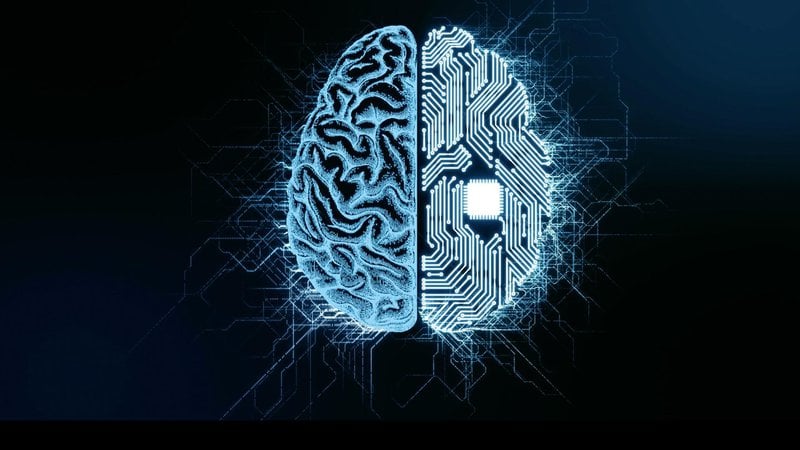
By Silvan Gebhardt and Satu Korhonen 18th June 2025
Inspired by: https://pivot-to-ai.com/2025/06/11/chatgpt-goes-down-and-fake-jobs-grind-to-a-halt-worldwide/
On June 10, 2025, ChatGPT went down and with it, an eerie silence settled across digital offices worldwide. As reported by Pivot to AI, entire categories of work ground to a halt. Not just coding, copy-writing, or planning, but something deeper: a synthetic hum of productivity stopped, revealing just how hollow some tasks had become.
But instead of panic, let’s take this moment as an invitation. What if we set aside one day per week, for instance Friday, to go AI-free? Not out of fear or neo-Luddite sentiment of rejecting the recent developments of AI, but as a practice of digital hygiene and a detox of cognition. It is all too easy to forgo the cognitively taxing process of critical and innovative thinking and just let AI handle it, but reclaiming a day to maintain those skills and to dive deep into human thinking is worth celebrating.
The Coin Flip Principle: Emotion as a CompasS
There’s a trick when you face a tough decision: flip a coin. Not to decide for you, but to observe how you feel about the result. If you were disappointed, you know you wanted a different outcome. If you were happy, it’s what you wanted all along.
AI can play a similar role. When we hit a writer’s block, we throw a half-formed idea at it. Sometimes the reply is insightful. But more often, it’s off, annoying, or bland. That emotional reaction tells us: “Ah, I do know what I meant. I just had to see it misunderstood.” It helps you clarify your thinking, and to crystallize what it is that you actually wanted to say.
That’s one of the correct uses of AI: a catalyst, not a crutch. More a thinking tool and not a thought replacement.
Cunningham’s Law and Creative Friction
As a catalyst AI has a lot of promise. There’s an old internet maxim: if you want the right answer, post the wrong one. (This is known as Cunningham’s Law.) People will trip over themselves to correct it and the result is better than silence.
In the same way, AI sometimes says the wrong thing. We say it hallucinates, or confabulates, or simply makes stuff up. Or it phrases what we meant incorrectly causing us to stop at the disconnect. And in that wrongness, we find clarity. Not because it “thinks,” but because it prompts us to reassert what we believe, what we meant, and what really matters.
But what happens if we stop doing that? What if we just accept AI logic and output as the correct response and assume we are mistaken? Or we forgo thinking all-together and outsource it to an AI system?
Mental Atrophy in the Age of Artificial Help
We don’t know what constant AI usage is doing to our brains. Not in a sci-fi sense but in terms of real neuroplasticity. What it means if we constantly get smooth, easy answers, instead of struggling to form our own opinions?
Think of your mind like a bridge: thoughts form patterns, networks, shortcuts. The more you walk those paths, the stronger they get. If AI walks them for you, it composes, emails, plans, and decides, what happens to the mental muscles you used to use? Do you still retain your abilities to think clearly, to critically assess ideas and thoughts, to notice something is off and does not fit with your view of reality?
When everything is optimized and no friction remains, how do we struggle enough to grow? And if we use AI instead of thinking ourselves, do we retain our abilities or will AI think and reason better than us, not because it is better but because we become worse than it?
The Generational Divide: From Digital Natives to AI Natives
We were both born before 1990. We watched the internet emerge and grew up with it as somewhat of a digital native. The current generation? Many of them have never been offline.
But now we’re seeing a new group: AI natives, who are people growing up never having known a world without assistants and AI summaries. What will this do to their brains, their emotions, their ability to form ideas through friction, doubt, silence, boredom?
Will AI be their endless Socratic partner? Or an emotional crutch that weakens the very processes it enhances?
There’s beauty in a child asking endless questions. There’s also danger in those questions being answered too quickly, too neatly, without ever testing their own voice. And there’s a danger with getting just the one AI generated response instead of the 3 million search results in a search engine.
A child growing up in this era can use AI to create endless worlds of wonder and fantasy. It can help them formulate thoughts and essays. But it will not teach them to think without it. To question and reason the reality it feeds them.
The Proposal: Detoxified Friday
So here’s the idea: One day a week, no AI. No ChatGPT. No Copilot. No autocomplete.
Just your own mind. And perhaps a book. Books crash less often. They work without power. They require you to read with focus and not just skim. If you need to go further: install blockers. Go offline. Turn AI into a forbidden fruit for some time and observe how your mind reacts. Are you bored? Frustrated? Inspired?
That’s the real signal.
Then make it a habit, or a ritual. Think of it like a digital sabbath. Not a ban but a choice. It is a chance to see what thinking feels like without the assistance and a chance to ensure our thinking capabilities remain.
Closing Thoughts
This isn’t about nostalgia. It’s not about fear. It’s about mental sovereignty. It is not about asking everyone to not use AI. It is a wonderful tool when used correctly.
Let AI be what it is. It is a tool.
But once a week, take back the wheel.
One response to “Friday AI detox: Reclaiming Thought in the Age of Infinite AI”
[…] Click here to read the full article: https://helheimlabs.ai/blog/2025/06/18/friday-ai-detox-reclaiming-thought-in-the-age-of-infinite-ai/ […]